You have bought the device. You didn't buy its functionality.
You can buy a device today that stops working tomorrow — without any contract being broken. Not because the hardware failed, but because the cloud service behind it disappeared.
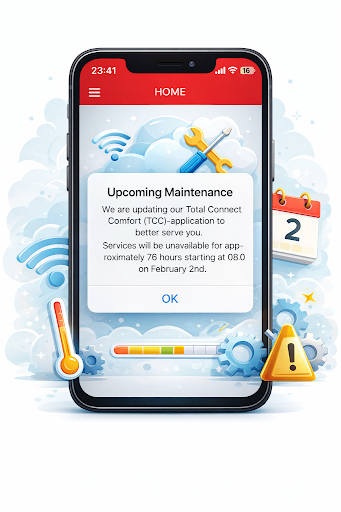
Many modern devices—cars, printers, medical tools, industrial equipment, smart home products—depend on ICT services and cloud backends to function.
Yet when we buy them, there is usually no contract, no SLA, and no guarantee that those services will still exist in five, ten, or even two years.
That’s not a technical issue.
That’s a governance and risk issue.
The hidden dependency problem On paper, you own the hardware.
In practice, the most important parts of the product live somewhere else:
Vendor-hosted clouds Authentication and identity services APIs and data pipelines Mobile apps required for configuration or control
If any of those are switched off, features disappear—or the device stops working entirely.
And most vendors reserve the right to do exactly that.
Concrete examples we already see This isn’t theoretical. It’s already happening across sectors.
Smart home & consumer IoT
Smart lighting, heating, or security systems that stop working when vendor servers shut down Devices that require cloud login even for basic local control Products becoming e-waste when mobile apps are no longer maintained
Automotive
Cars losing app-based features such as remote locking, diagnostics, or route planning after a few years Subscription-based features tied to backend services that can be changed or withdrawn Vehicles that are mechanically sound but digitally degraded
Printers and office equipment
Printers that require cloud authentication or vendor accounts to scan or print Features disabled when online services are modified or retired Perfectly functional hardware rendered unreliable by service changes
Industrial and professional equipment
IoT gateways and controllers dependent on proprietary vendor platforms Monitoring or analytics features lost when platforms are sunset Long-lived assets (10–20 years) tied to short-lived software services
Medical and health devices
Fitness and medical devices whose data, analytics, or configuration depend on vendor apps Devices still physically operational but unsupported when digital platforms are discontinued Serious compliance and continuity risks for clinics and patients
In all cases, the pattern is the same:
the hardware outlives the service it depends on.
“As-is” cloud, permanent hardware Cloud services are typically provided on a best-effort basis:
No uptime commitment No guaranteed availability horizon No mandatory notice period No obligation to offer self-hosting or migration
The result is a mismatch:
Physical products designed to last years** Digital services that can be discontinued overnight**
From a buyer’s perspective, that’s an unmanaged lifecycle risk.
Why SLAs are rare SLAs create responsibility.
They require vendors to commit to:
Availability Duration Support and exit obligations
For many manufacturers, especially outside enterprise markets, it’s easier to label cloud services as “value-added” or “optional”—even when the device cannot realistically function without them.
What buyers should start demanding Whether you’re an individual buyer, an IT department, or a procurement team, these questions matter:
Does the device function locally without cloud services? Is there a published end-of-life policy for digital components? Are open standards or documented APIs available? Is self-hosting possible if the vendor exits? What happens contractually when the service is discontinued?
If these questions don’t have clear answers, the risk has already shifted to the customer.
This is bigger than convenience This is about:
Digital durability Planned obsolescence Sustainability and e-waste Trust between vendors and customers
Hardware without guaranteed functionality is not a complete product—it’s a conditional one.
Until availability, longevity, and exit strategies are treated as first-class requirements, buyers will continue to pay full price for products whose usefulness can be partially revoked.
If we can’t rely on the cloud behind a device, do we really own it—or are we just renting its usefulness?